A radiator that heats unevenly is often giving you a useful clue about what is happening inside your heating system. Cold at the top, cold at the bottom, or completely cold can point to different causes. Knowing what each pattern means can help you choose the right next step quickly.
A radiator should normally warm across most of its surface once your central heating has been running for a while. When part stays cold, the location of that patch can help identify the likely problem. If you are wondering why your radiators not heating up, start by checking whether the top, bottom, or entire radiator feels cold. Trapped air, sludge, valve problems, poor system balance, or a wider heating issue can all affect performance. Reading these signs correctly can save time, prevent wasted effort, and help you choose a fix that addresses the cause rather than the symptom at home.
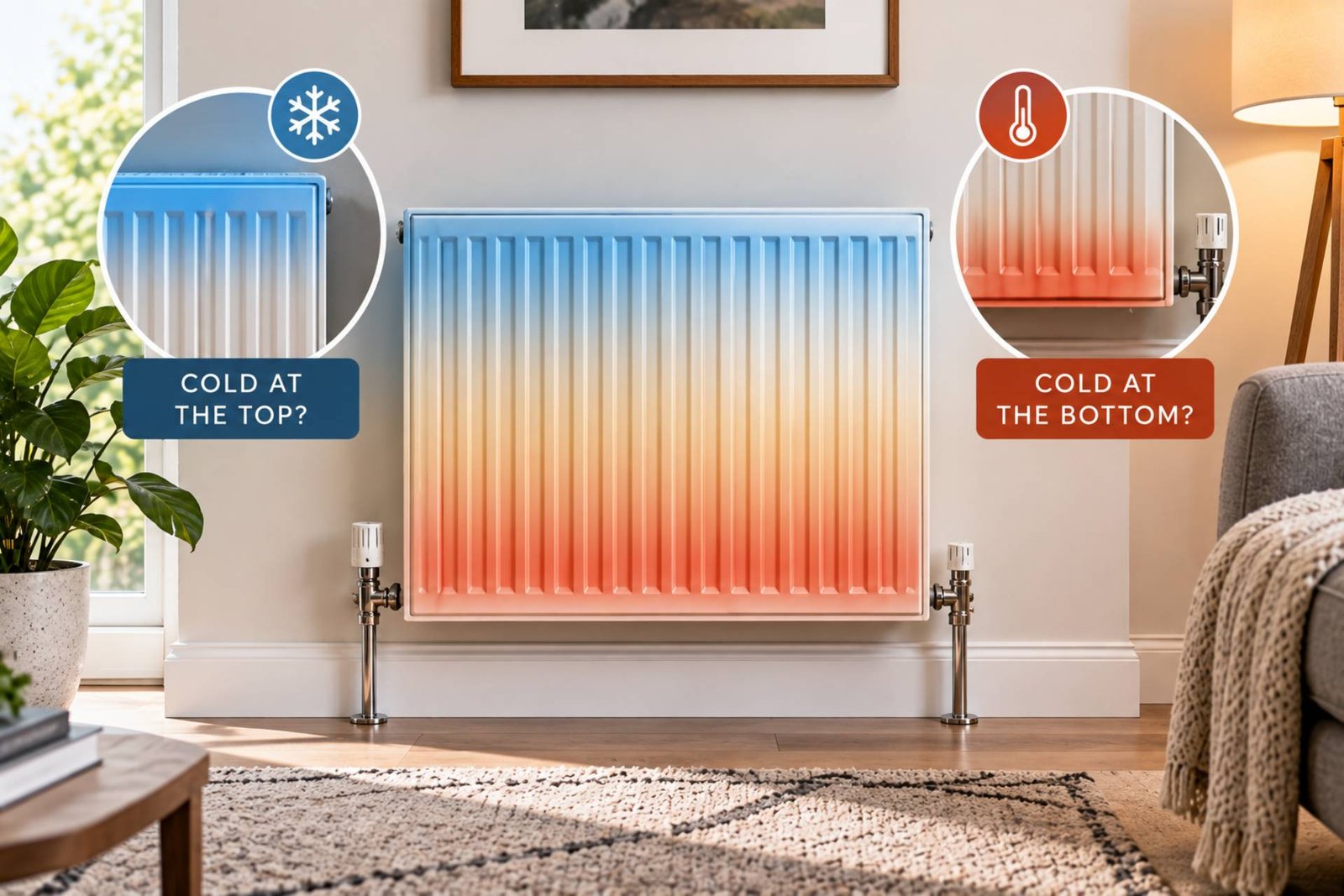
Cold at the Top Usually Means Trapped Air
If the bottom feels warm but the top stays cold, trapped air is a common cause. Air rises inside the radiator and takes up space that should contain hot water. You may also hear gurgling.
Bleeding releases the air. Turn the heating off and let the radiator cool before opening the bleed valve carefully. When air stops escaping and water appears, close the valve. Check the boiler pressure afterwards.
Cold at the Bottom Can Point to Sludge
A radiator that is warm at the top but cold along the bottom suggests a different problem. Rust particles, dirt and scale can settle inside the lower section and restrict hot-water circulation.
Bleeding will not clear this build-up. The radiator may need flushing, while heavier or recurring sludge can require professional attention. Turning the thermostat higher will not remove the blockage.
What If the Whole Radiator Is Cold?
If one radiator stays completely cold while others heat normally, check its valves. A stuck thermostatic radiator valve can stop hot water from entering. If radiators heat at very different speeds, the system may need balancing.
This is another clue when checking why your radiators not heating up. If several radiators stay cold, or you have no hot water, unusual boiler noises or repeated pressure problems, the issue may affect the wider heating system. A competent heating engineer should inspect it.
Match the Symptom to the Right Fix
Do not treat every cold radiator the same way. Cold at the top often means air. Cold at the bottom often means sludge. A completely cold radiator can point to a valve or circulation problem.
After any simple adjustment, run the heating again and recheck the radiator. If the fault keeps returning, further investigation is wiser than repeating a temporary fix.
FAQs
Why is my radiator cold at the top and making noises?
Trapped air is a likely cause, especially with gurgling. Bleeding can help hot water reach the upper section again.
Will a higher thermostat setting fix a cold radiator bottom?
Usually not. If sludge is blocking circulation, more heat will not clear it.
Why is only one radiator cold?
A stuck valve, trapped air, sludge or restricted flow may affect one radiator while others still work.
Should I bleed a radiator that is cold at the bottom?
Bleeding targets trapped air. A cold bottom is more often linked with sludge and may need flushing.
When should I call a heating engineer?
Call for help if several radiators stay cold, pressure problems continue, faults return, or basic checks do not restore normal heating.
Conclusion
Uneven radiator heat is more than an inconvenience; it can be a useful diagnostic sign. A cold top commonly suggests trapped air, while a cold bottom can point to sludge restricting water flow. A radiator that stays completely cold may have a valve, balancing, or circulation problem. Start with the simplest safe checks, but avoid assuming every issue needs the same solution.
Understanding why your radiators not heating up helps you act on the symptom rather than guess at the cause. Bleed a radiator when trapped air is likely, consider flushing when sludge is restricting the lower section, and check valves when an individual radiator remains cold. If several radiators are affected, heating pressure is unstable, or the problem keeps returning, arrange a professional inspection. Careful diagnosis can restore more even warmth, reduce wasted heating effort, and help your central heating system work as intended throughout colder months.